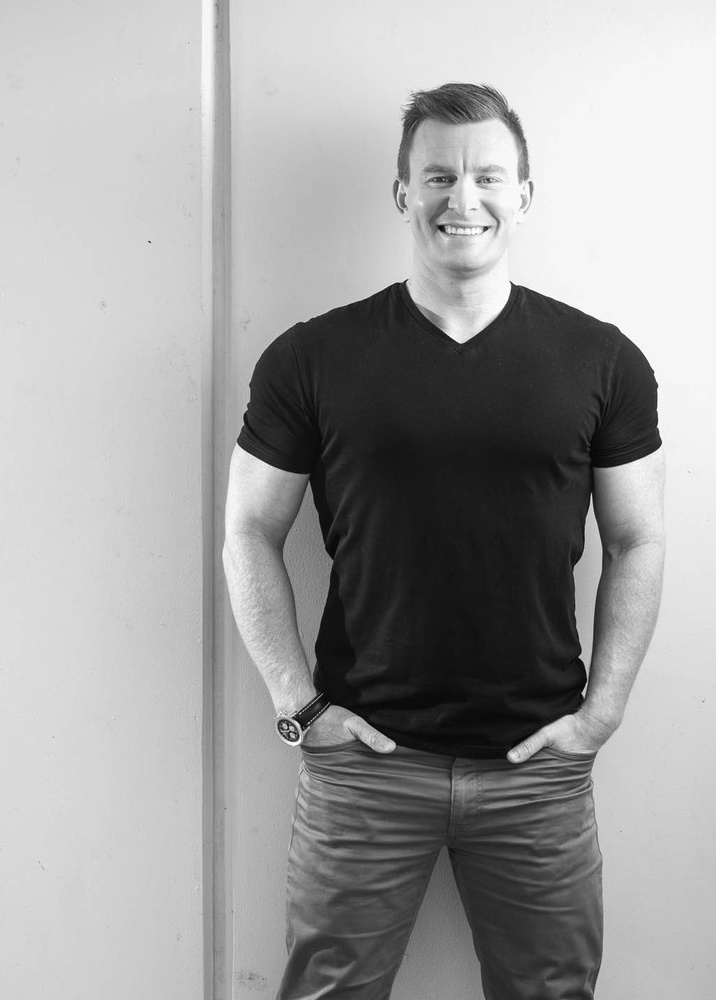

Therese Kerr is set to radically transform our buying habits by shining the light on the lack of integrity and truth on labels in the cosmetics industry. She believes wholeheartedly that a shift must take place at a grass roots level to enable real and lasting change. Therese has devoted much of her life to researching the impact of environmental chemicals and toxicants on human health. She is incredibly knowledgeable on this subject and is passionate about educating and empowering others. Therese was voted Australian Organic Industry Leader and one of Australia’s Top 50 most Influential Women. We take an in depth look at the widespread detrimental effects not only to our health, but to the health of our children and generations to come. For the sake of people and planet.
As spoken to: Jodie Ferrero
Therese, your passion for wellness and your advocacy work is truly admirable. Take me back to that defining moment when you discovered your purpose.
Therese: In 1995, I had Endometriosis and Hashimoto’s and then in 2001, I had tumors in my spleen. Like most people, until I had illness I didn’t realise the importance of wellness. Since then I’ve been living and breathing health and wellness by educating people on everyday toxicants that affect our bodies. When we learn about the level of toxicants and environmental factors that we subject our bodies to, we then become proactive with our choices.
It is certainly important information to share to raise awareness of the impact on our health and we need to understand that it starts with the producing and manufacturing processes.
Therese: Exactly! There’s so many different classes of chemicals in our everyday cosmetics, not just skin care, but basically everything – skin, hair, beauty, personal, baby, oral care, men’s care, perfume, cologne, fragrance, makeup, candles – anything that you find on the cosmetic floor in a department store, not to mention the amount of plastics used in almost every area of our lives.
Until last year, I was predominantly focusing on skincare, but after recently selling the major portion of The Divine Company I’m now able to dedicate my time to be an ambassador of InnerOrigin, an online wellness marketplace. Professor Mark Cohen, Dr Charlie Teo. David Wolfe, Pete Evans and Layne Beachley are also ambassadors, and this is a people powered movement. InnerOrigin provides transparency so you know the country of origin of all ingredients in all products. All products are reviewed and approved by an independent Product Advisory Board of which I’m a member. Nothing gets through or makes it onto the platform unless it’s healthy and free of harmful chemicals and toxicants.
It sounds like InnerOrigin could shake things up in the retail space and perhaps have a positive ripple effect.
Therese: We’re bringing a complete paradigm shift to retail and along with it much needed integrity, transparency, authenticity, honesty, and truth on label and that’s vitally important. We’re raising awareness around labelling and the word ‘organic’.
Companies can claim that a product is organic even if it contains only one natural ingredient, and yet may contain hundreds of chemicals. The unsuspecting consumer, who isn’t aware, will think they’re buying a healthy alternative when really, they’re being deceived. You’ll see paraben-free or SLS free, but what they don’t tell you is that the chemicals that replace the paraben’s or the SLS are even worse than the original chemicals.
That can be really confusing for the uninformed consumer and create stress, anxiety and doubt in the simple act of nmaking a good choice.
Therese: We deserve the truth and to know what we’re buying. We need to transform this at ground level. We can do this by changing our buying habits, switching from the big retailers and purchasing from a trusted place where you can be assured that every product has been reviewed and approved. You demand authenticity, transparency and truth on a label.
Let’s say I have a new cosmetic product. What’s the process in Australia to get my new product onto the shelf?
Therese: There isn’t any pre-market health testing on any cosmetic or skincare product before being released into the Australian market. The use of chemicals in cosmetics in Australia and the United States is largely unregulated, with most chemicals being considered safe until proven otherwise.
Very few chemicals are ever tested in cosmetics. Miranda and I have created over 125 different cosmetic products. We’ve never once been approached by a regulatory body to ask us what’s in our products.
Most people would naturally think that what’s on the shelves is safe.
Therese: Companies are driven by profit, not by people’s health. Since WWII with the industrial revolution, we have allowed hundreds of thousands of chemicals to be released into our world with minimal, if any, safety testing.
There are eight major classes of chemicals in our everyday products – carcinogens, endocrine-disrupting chemicals, reproductive toxins, developmental toxins, neurotoxic toxins which are toxic to our nervous system, reproductive toxins, obesogens that cause our fat cells to multiply and teratogens which cause birth and embryo defects. From processed foods containing artificial colours, flavours and preservatives, to agricultural chemicals sprayed on our crops, we have been apathetic and blissfully unaware as a society, blatantly accepting the growth in consumerism and convenience we desire to make our lives easier (I was no different), but at what cost?
From my understanding, there are only a handful of chemicals recognised to be harmful and therefore banned from use in cosmetic products within Australia. However, in Europe cosmetics are much more highly regulated, with more than a thousand chemicals prohibited.
Therese: Australia blindly follows the cosmetics industry in America. They have their own Cosmetic Ingredient Review Panel (CIR) to determine whether the chemicals they use in their products are safe. In over 40 years, they have banned only 10 chemicals in cosmetics. In contrast to that, the European Commission established the REACH Program in 2007, and have now banned over 1,330 chemicals that they consider broadly toxic and dangerous to human health. These chemicals are known to be harmful, yet in Australia, and most countries around the world, we buy products containing them.
Unfortunately, The Cosmetics Industry in America (that we follow blindly) is predominatly a self-regulating body and the government should never allow a self-regulated industry.
That is very concerning and a fact that most consumers would be blissfully unaware of, I’m sure.
Therese: I believe we are the only species actively contributing to our own extinction and to the extinction of other lifeforms on this planet and we are doing it without even knowing that we’re doing it! We’re allowing companies to release chemicals, pesticides, insecticides, glyphosates, they are chemicals in our foods. The chemicals in our cosmetics are being washed down the drains, being released out into our waterways, without any concern as to the impact. Cancer has increased from 2005 to 2015 by 33%. Predictions now are that by age 85, one in two people will have cancer.
Cancer is now the number one disease around the world and also for children under 15 in Australia. We have over a hundred different autoimmune diseases in this country alone. Sperm count in men has declined from 1973 to 2011 by 59%, according to the Systemic Review published in 2017. I believe it’s worse than that now. There’s a documentary called ‘The Disappearing Male’ and I encourage everybody to watch it. The documentary states that of the remaining sperm, 85% is considered abnormal.
The World Health Organization, in a report from 2012 states an increase of 400% in genital malformation in baby boys and according to a report released in February 2019, the incidence of genital malformation in Australia now sits at 1 in 115 baby boys now being born with malformed genitals. 70% of women as at 2016, had some hormone-related disorder. One in seven women of childbearing age were considered infertile. Half of all infertility cases are now men, one in six couples are experiencing fertility challenges, and half are related to men. Young girls are going through puberty at age 8 to 10 now, it used to be 12 to 14, and the World Health Organization report states that we’re now on the tip of the iceberg in relation to the incidence of hormone-related disorders. So if we’re already on the tip of the iceberg, where are we heading? When I share the above statistics, most people are alarmed and shocked. Yet with almost 50% of Australian’s now having a chronic illness as reported by the ABC in July 2019, it begs to question why on earth is this information not public knowledge?
Absolutely. We’re starting to see an increase in conscious consumerism, people taking time to consider their product choices, their environmental footprint, and the impact their decisions can have on their health, the health of their family and the health of the planet.
Therese: Yes, the Australian Organic Market Report last year stated that more people are spending time in supermarkets reading labels in search for healthier products. The big companies however are jumping on the bandwagon and are, for lack of a better word, bastardising products with misleading marketing slogans and labels to deceive consumers. If this continues to happen people will lose faith and trust in ‘organic’ products. We need integrity, truth and transparency in retail.
As the ‘Queen of Clean’ I’m sure it’s probably never been more important to you than now, when you have another grandchild on the way, to advocate for the wellness of people and planet for generations to come. You certainly put your heart into everything you do!
Therese: You know, the best thing that happened to me was having tumors in my spleen because it put my family on a path towards wellness.
Children nowadays are being born pre-polluted with literally thousands of chemicals in their little umbilical cords. Babies do not have the detoxification ability of an adult. Their immune, nervous and endocrine systems are not fully developed so these chemicals remain in their little bodies.
This predisposes them to potential weight problems because when we can’t get rid of chemicals, our body purposely puts on more fat to store those chemicals in. Professor Grand Jane and Professor Lundergan from the United States have spent their lives studying neurotoxic chemicals and state that “exposure in utero to these neurotoxic chemicals will impact a baby or a child’s IQ by age seven”. There’s so much research that I could quote regarding this, I live and breathe it as you know. My vision is to transform health within one generation, and how do we do that? By educating and empowering parents to minimize or hopefully never expose their children to these harmful chemicals so that in turn, when they have babies, they don’t expose their children.
As a parent myself I understand how important it is to make good choices from the outset when it comes to the health of my children and how equally important it is to empower them and guide them with knowledge and awareness so that they too can make good decisions in the future.
Therese: It may sound like doom and gloom, but you know, it’s not. Many illnesses are linked to environmental factors of some sort, even genetic related illnesses, more often than not, are caused by environmental factors that trigger genes to express.
We can control what we put in our bodies. We can change what we put on our skin. We can make choices about what cleaning products we use, and we can transform all that in a whim. I ask people not to go into overwhelm, but rather see this as an opportunity for empowerment. I know without a doubt, I control the level of toxicity on my body and I’m not going to put chemicals on my body that, according to the FDA in America, one in five (that’s almost 20% of all cosmetic products on the market) contain formaldehyde releasing chemicals known to cause cancer.
How many people know that? I’m pretty sure if they did, they’d make healthier choices. Companies will only stop making chemical laden products when we stop buying them and the demand ceases.
I find that it is a case of continual evaluation and I think it’s so important to recognise that we each have a voice and a choice and if we want to see things change for the better we need to take individual action and collectively this will make a difference.
Therese: There’s so much information now available, but people have to be open and be willing to learn and change. I made the choice as a result of my illness to embrace the learning and use this knowledge to transform my health and my family’s health. I can honestly tell you it’s been the best thing to ever happen to myself and to my children and my grandchildren because they are all healthy as a result of what I went through.
I ask people not to wait until illness strikes, but to choose health. We have a public profile as a family, and I believe if you have a public profile you have a responsibility or an obligation if you know something, to share it.
I could sit and rest on my laurels, but that’s not who I am. I’m really about educating and empowering people. People say to me, “you’re so determined to make a difference, what do you do for fun?”. Well, my husband and I ride motorbikes. We go for adventures in our motor home, we ride horses. I’m still doing all of that and I’m 54. I’m probably more active than I’ve ever been in my life! I do ice bathing and I climb mountains. It is the first time in history that adult children are dying before their parents. As a population we are living shorter and dying longer and that’s not how I want to live my life. I want to go out singing and dancing!
You’re a shining example of health and a wonderful advocate for wellness Therese. Let’s continue these conversations in our own lives, and I wish you wonderful travels in your motor home.