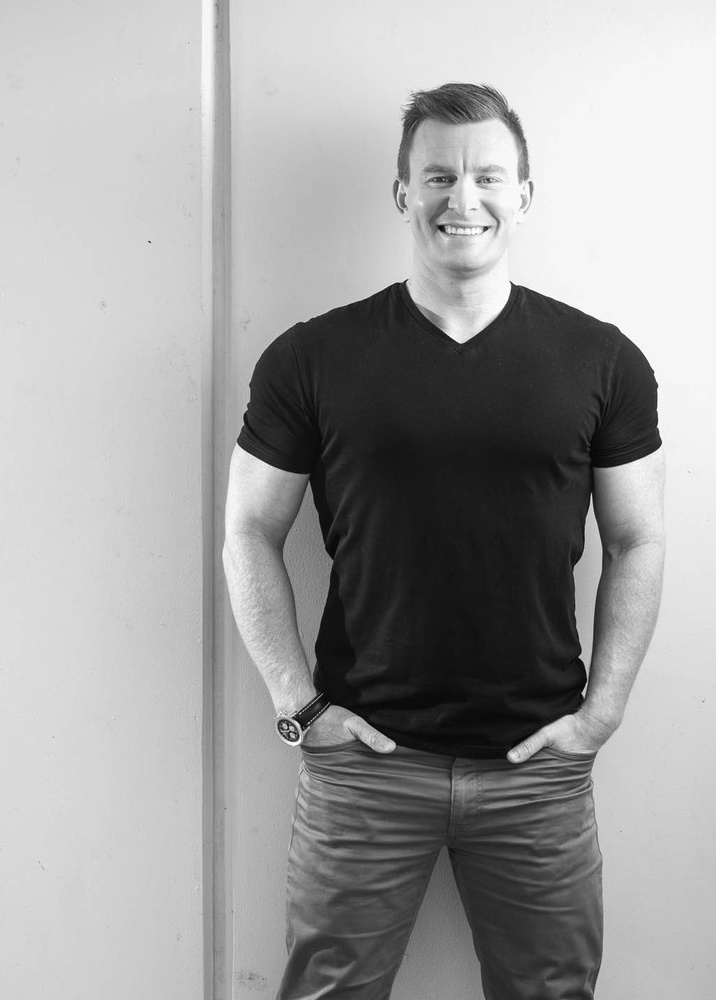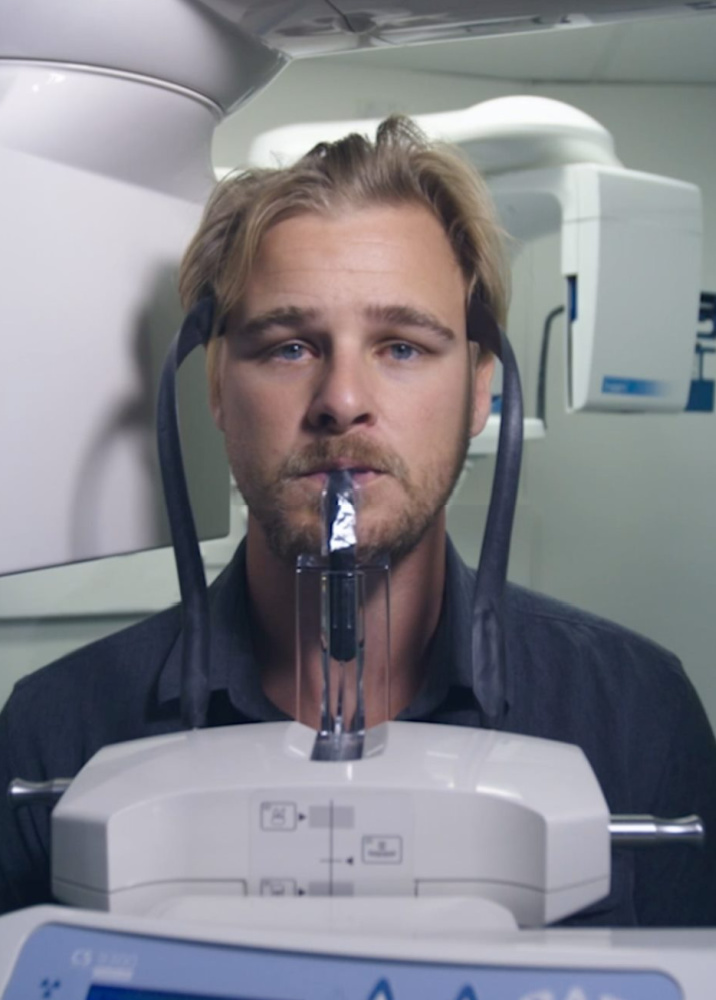

Dr. Todd Lizon is a practicing chiropractor and tireless researcher who has obsessively devoted the last 5 years to the pursuit of the science of photobiomodulation and its effect on health and wellbeing. He has published numerous articles and dozens of videos on photobiomodulation and firmly believes the time is not far away that a red/near infrared light will be in every home.
As spoken to: Emma Lodge
When did your interest begin in photobiomodulation?
Todd: I’ve been into saunas for a long time. I’ve always recommended them to assist my clients with chronic disease. Eventually in 2012 I got into the manufacturing of near infrared saunas and designed a portable one primarily for relaxation, stress management and detoxification. Since then I’ve dived in deep reading and researching everything I can about it.
I’ve only recently heard about the benefits of near infrared light, have the studies been around for long?
Todd: We’ve known about photobiomodulation (light therapy) for over 40 years. It was accidently discovered in 1967 by a chap named Endre Mester from Hungary. He acquired a low level red laser (that he thought was a high powered laser) and used it to experiment on rats to see if he could treat cancerous tumours. Working on the rats he soon realised there was no change at all to the cancer, however what he did notice was the cut where the tumour had been implanted healed faster and their hair grew back quicker. So, what are some of the uses for it now? Hair growth and injuries. Back then they didn’t know how it worked, they just knew it did a lot of things. It’s really only been the last 10 – 15 years that we’ve started to understand how it all works.
I’ve been reading up on some of the studies and its incredible the broad spectrum of things near infrared light treats.
Todd: The studies are irrefutable, of which there are now thousands of journal articles. You won’t see transformation straight away in a single session, but we know the effect is there. The biggest objections people have as soon as they hear about light therapy is, they think its very airy fairy non-scientific, how can light possibly have an effect on the body?
The way I explain it is to picture visible wavelengths (a rainbow) with purple on the left and red on the right. On the other side of purple is ultraviolet and while this is ionising radiation that can cause damage, we still need it for Vit D production. On the other end is red light and then near infrared light, that’s non-ionising which doesn’t damage cells, but still is needed and has a positive effect on the cells as well. I also explain chlorophyll in plants and how light is absorbed by chlorophyll and turned into energy. Humans have the same capacity to do this which is in the mitochondria.
And mitochondria are the “powerhouses” of the cell…
Todd: Mitochondria is the battery and if that’s depleted then things aren’t going to function well. Red light and near infrared light, is what the mitochondria are interested in. This is probably the most neglected piece of the puzzle. People don’t realise they actually need light for their body to produce energy and function properly. This is because we’ve never really understood the sun and infrared light and how it all works until now.
But people are scared of the sun, it’s been drilled into us to cover up and stay out of the sun.
Todd: That is what got me really fascinated. A research paper came out in 2015 where they applied different wavelengths (red and near infrared light) to human skin. They then applied ultra violet light to the same area and guess what.. when they dosed the light and pre-conditioned the skin with near infrared light in the right amounts it didn’t burn.
If you stop and think about it, in traditional human society we were always outside, so in the early morning hours you’d get exposed naturally to photobiomodulation that had a protective effect up to SPF 15 sunscreen (as per the research). Nature has built in the sunscreen! But what do we do? We don’t go out in the early morning, so we don’t get the protection, we go out in the middle of the day and then scream the sun is bad.
Wow there’s a way to apply the sun?
Todd: Yes there’s an application, and if you think about how we should be following the circadiam rhythm, which is basically our 24 hour sleep/wake cycle, waking with the sunrise and winding down at sunset, that’s what nature has intended and there’s got to be a reason for that.
One big reason is that red light stimulates the production of hormones, specifically it increases melatonin, and when you increase your melatonin production it not only helps you sleep, but also helps your body repair and recover.
It’s one of the most potent antioxidants for our mitochondria and a really big part of regulating our circadian rhythm. You’ve really got to look at what nature has designed, but the problem is how many of us get exposed to natural light?
We spend so much of our lives indoors these days in front of screens under artificial light. Do you think sickness could be linked due to a lack of natural light?
Todd: My personal belief is we’re near infrared light deficient, and if you’ve got that deficiency your mitochondria are not going to be fuelled adequately. What makes it even worse is exposing yourself to excessive “blue light” LED lights and screens, especially after dark, as this further depletes melatonin, throws our circadian rhythms off and contributes to the origin of chronic disease from the mitochondrial dysfunction perspective. That’s pretty scary stuff.
And I guess when you look at our cities now, they’re completely lit up, even affecting the circadian rhythms of wildlife and nature.
Todd: It’s hard for people to believe that artificial light can have such a negative health effect, and yet the research papers are clear, when you expose yourself to artificial light after dark your melatonin production is dramatically decreased which leads to energy and sleep problems.
The only real fix is to get back to natural ways if you can. Now I’m not saying we should all go out and start living in tents and caves, but we have the technology now to mimic what nature has intended while still embracing the positive side of our modern lifestyle.
Certain ‘hacks’ are easy such as blue light blocking glasses after sunset. They can be critical. Night-time mode on your phone and computer. Black out curtains for a good sleep. Sunrise in the morning and evenings if you can or use a red/near infrared light. Cold water is another hack for the mitochondria.
Can you talk me through your NIR and heat lamps, I can see you’ve got a few here, what’s the difference?
Todd: The first one has two different lights, both red and near infrared light. The red light doesn’t penetrate as deep but is readily absorbed by skin tissue, so this one is typically used more for skin regeneration and collagen production. The near infrared light is invisible to the human eye and penetrates deeper into tissue.
Oh I just thought those bulbs weren’t working!
Todd: A lot of people think the bulbs aren’t working and a lot of confusion comes from the terms near infrared and far infrared.
Which is what we can see and what we can’t see?
Todd: The concept that people need to grasp first is that near infrared is heatless, and far infrared is heat. That’s the main thing. If you have a sauna it has to be far infrared. So, a typical sauna is a wooden box with far infrared in the panels, it makes you sweat and you get all the detox benefits – that’s good. The main con is a lot of them have very high EMF levels. The other is most don’t have near infared lights for photobiomodulation.
What makes the Therabulb lamps that you’re exclusively using so amazing compared to anything else?
Todd: The big difference is we need to treat light as a form of medicine and calculate the dose. If you want to calculate the dose you need to know what the irradiance level is. The Therabulb lamps have been clinically tested to confirm their output and irradiance levels. It’s the dosing of the infrared that is always key.
How much do we need?
Todd: When using it therapeutically you need to get it into the right ranges. The ranges, for example if you’re treating skin, is about 3-15 joules. If you want to treat backpain or the brain, then the dose should be anywhere from 20-60 joules. It really comes down to why a person is using it and what’s their goal.
For the average person the sauna is the way to go as you get full spectrum light that mimics nature sunrise/sunset), and you also get the sweat and detox that has so many benefits. However, if someone has Alzheimer’s for example, and they are not likely going to want to sweat unnecessarily in a sauna, (but they should because they probably need to detox as well) ideally they will need a therapeutic dose with a red/NIR lamp (no heat) aimed at the head about 10cm away and the session would last approx. 10-15 minutes.
Which leads me onto a real area of interest… A recent Australian study was conducted to see if light therapy could help with Parkinson’s disease. They shone the red light on the brain of a rat, then they wrapped the rats head in aluminium foil to block all the light from penetrating. They then shone the light on the rat’s abdomen and received almost identical results. You don’t need to shine the light on the brain to get brain effects!
How does that happen?
Todd: Well there’s a concept that exists called remote or indirect photobiomodulation. For example, what we are now finding is that if you have an injury on the right side of your body but shine the light on the left you can get the same healing effect . There are systemic mechanisms at play, which makes a lot of sense when you consider that sunlight cannot penetrate the skull and get into the deep parts of the brain stem where Parkinson’s is located.
So if the light is not penetrating that deep how is it working?
Todd: It’s all to do with cellular communication and to me that’s the most fascinating part. There’s a lot of research now showing it’s the stem cells that circulate through the blood and go to wherever they are needed. These stem cells then by very definition turn into the cell that’s needed to create healing. So, we know the dose is having an effect even though it cannot be felt. All the research is showing that is exactly how it works.
So essentially through photobiomodulation the body is producing its own mechanisms and cells to heal itself? You can actually create the conditions from within to heal?
Todd: Yes correct. And we know if you treat with stem cell therapy and you are irradiated with infrared light, the effect of the stem cells increases as well. It’s about increasing the energy production within the mitochondria and decreasing inflammation through photobiomodulation. In my opinion the best way to treat is to expose your full body to the light and then let it decide what has to be fixed. Another area of exciting research is the gut microbiome.
Early studies are showing that light when applied to the body affects the gut microbiome. The light absorbed gives the cells the right amount of energy and anti-inflammatories. We all know about the gut – brain connection right? And we know for a fact that people with Alzheimer’s and in particular Parkinson’s have an altered gut microbiome. So working with light therapy on how it can affect the brain and gut is a really interesting area of research.
It all sounds fascinating and I can see how our lack of natural light is impacting many areas of our lives. We’re so lucky that we do have the research and technology to navigate our modern world and protect ourselves with these ‘hacks’ such as infrared light.
Todd: Absolutely. Ultimately, as with many hacks, the thing that makes me happy is it’s just mimicking nature.