
We continue the conversation with Anna Scott from YWAM Townsville to find out what impact the Days for Girls kits have had on young women in the remote Papua New Guinea communities.
As spoken to: Emma Lodge
Tell me about YWAM…
Anna: YWAM (Youth With A Mission) has been running for over 50 years all over the world, we’re in 180 countries now and in over 1000 locations. We’ve been running in Townsville for 25 years and recently celebrated our anniversary which is really exciting. Our region extends from North Queensland, into the Pacific Islands and out toward Southeast Asia with a particular focus on Papua New Guinea where our Medical Ship operates. We send teams to do community projects and youth initiatives throughout North Queensland, and more recently we have been working in partnership with the PNG National Government to help address the significant health challenges in remote PNG communities. Everyone within the organisation are full time volunteers, so it means that all the work we carry out goes straight back into the communities.
Fantastic, and what kind of work has YWAM Townsville been carrying out in PNG?
Anna: So through our medical ship we focus on really remote communities that lack access to health care and training. Many villages miss out on the real basic services because of their isolation. They say that 84% of PNG population actually live in rural areas not in the cities and urban places; so this limits access to basic healthcare services for a vast majority of the population.
Oh yes I’ve often seen the medical ship in port but didn’t know what it was.
Anna: So our ship holds over 100 people onboard, we have a dentistry clinic and also a theatre where we can do eye surgery. Cataracts are a big thing in Papua New Guinea, many people struggle with blindness from cataracts that can easily be removed with really simple eye surgery. We’ve had incredible stories of people who have come in blind one day, then returned the next to have their patch taken off and they can see again. So imagine not only having your sight restored, but the impact this has on the community for a person to be able to provide for the family again and not be a burden.
It’s a miracle in a lot of ways seeing someone go from being blind to having their sight restored. We also have teams that work on land, so our primary health care team focuses on maternal and child health, as well as providing education on diseases like malaria, tuberculosis and leprosy. These diseases are quite significant in rural areas so we run health promotions and focus a lot on prevention. We’ve also got our optometry team that checks eyesight and hands out glasses, and we’ve got our community engagement team which covers health education in schools.
So the health education would include distributing the Days for Girls kits?
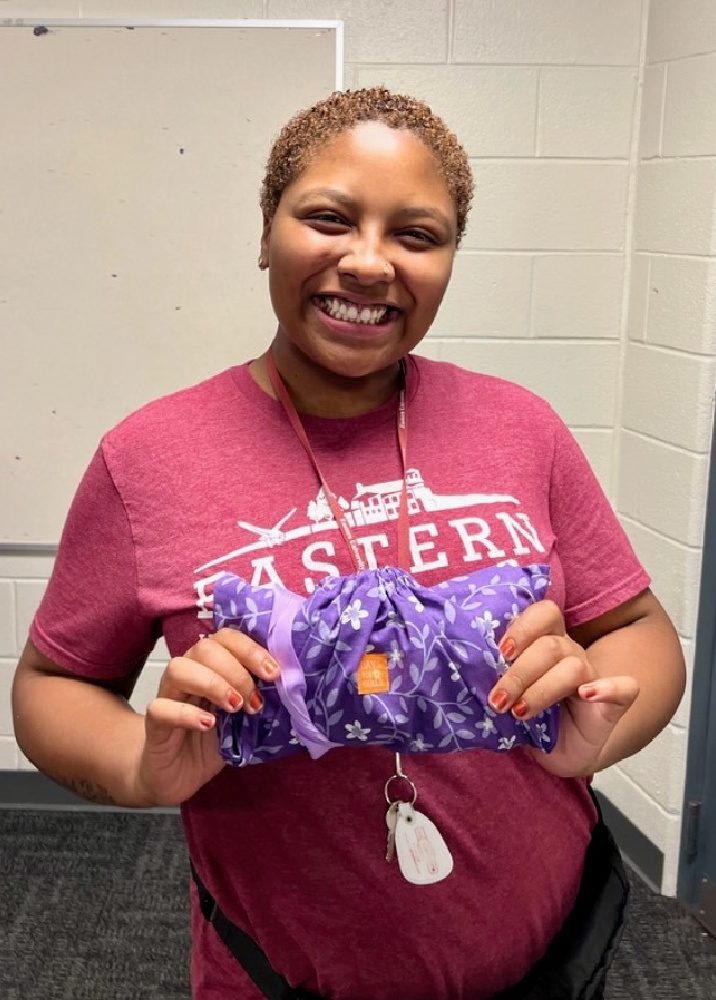
Anna: Yes we focus particularly on health education for women as we find that women are often left on the outskirts, so we really want to work on drawing them out and including them in a lot of our programs. Women’s health and sex are just not talked about, so we open up the conversation to girls in a really intimate setting with their teachers and go through a lot of education which is where the DfG kits come in. I think the most special thing is there’s a longing for girls to talk about this stuff, not only about women’s health but their value as women. Addressing things like you don’t have to have sex if you don’t want to, really affirming their identity and the choices they can make, and empowering them as young women. So it’s much more than just giving them a kit that’s going to help with their period, it’s also instilling value and self worth in women.
These intimate conversations also allow us the opportunity to share our own stories, regardless of culture or where you’re from I think there’s something within women that want to know they have value and that they’re seen and have something to contribute. That’s really something we try to impart through these gorgeous DfG kits, they allow us to present something really beautiful and give an opportunity to open up conversation.
What were the girls using before they received the kits?
Anna: We find a lot of times the girls are just using rags or whatever they can find when they’re on their period, often they’ll not go to school for the week and they’ll isolate themselves from the community. It’s not something that gets talked about, and it can honestly be a bit of a shameful thing.
What impact has the kits had on the girls?
Anna: We’ve been distributing kits for the last 12 months which has really added a lot of value to our program and again has promoted gender equality and empowering women. So when the girls see the DfG kits their eyes light up because of the bright, beautiful patterns and it’s a pack just for them. We find the girls are often a bit shy to begin with, a lot of them giggle you know as it can be embarrassing to talk about, but there’s something you can see them drawing in and hanging onto every word you say because it’s such a unique conversation and its meeting a need within the heart which is really special and important.
How many kits has YWAM distributed so far?
Anna: We’ve distributed 2,356 DfG kits to date, but we’ve been really limited with the amount of kits available so we’ve had to really ration them which has been a real shame.
So you need more?
Anna: Oh yes, we always need more and are constantly putting out the word for people to make them. We currently target the fifteen/sixteen year olds but obviously we would love to expand that for the younger girls coming into that time in their lives, but because of the amount we’ve had and not wanting any village to miss out we’ve had to focus on that particular age group so we have enough. We would love to give more; I mean every woman in the village should have one.
How many villages have you targeted so far?
Anna: We visit about twenty five villages every two weeks with the ship, and try to work it in with the schools as much as possible because we want the teachers to be hearing the same teaching and continue to model the program. Often the teachers get a lot out of it too because it’s not something they’ve grown up learning.
We recently had a textile teacher who was really enthusiastic about the DfG kits but was heartbroken when she found we only had a limited amount, so she asked for the patterns, found some fabric and got the students to make them as a class project. That was really special because she captured the heart of it, we were able to give her the patterns and she was then able to get students and the women in the village to make them.
Ultimately we would love the community to own it and be a part of it. Hundreds of villages have had the opportunity to hear the message, so it’s been quite an achievement.
What are you facing when you head into the villages, obviously there’s a lot of poverty…
Anna: Every village and area is different. There’s over 800 languages in PNG and a thousand tribes, so it’s really really diverse. You could go to one village where they speak a language and have certain customs and then you go up the river a little to find a different language and different customs. Tuberculosis is quite huge there at the moment, they’ve called it a national crisis. Malaria is as common as getting a cold in a lot of places. There’s more and more cases of Leprosy coming up and I think just the isolation of these communities is the real battle, when you’ve got no roads or airstrips how do you actually get to these places? So with the medical ship we’ve been able to access a lot further with that and trekking into villages. It’s not impossible, there are ways to be creative and use innovation to get you where you need to go to break the isolation, which is what we aim to model. So I think it’s a special mission. Going to these places means that they’re not forgotten, there is a way. It’s also helping to instil hope into a lot of communities which is one of the most special things that we’ve done.