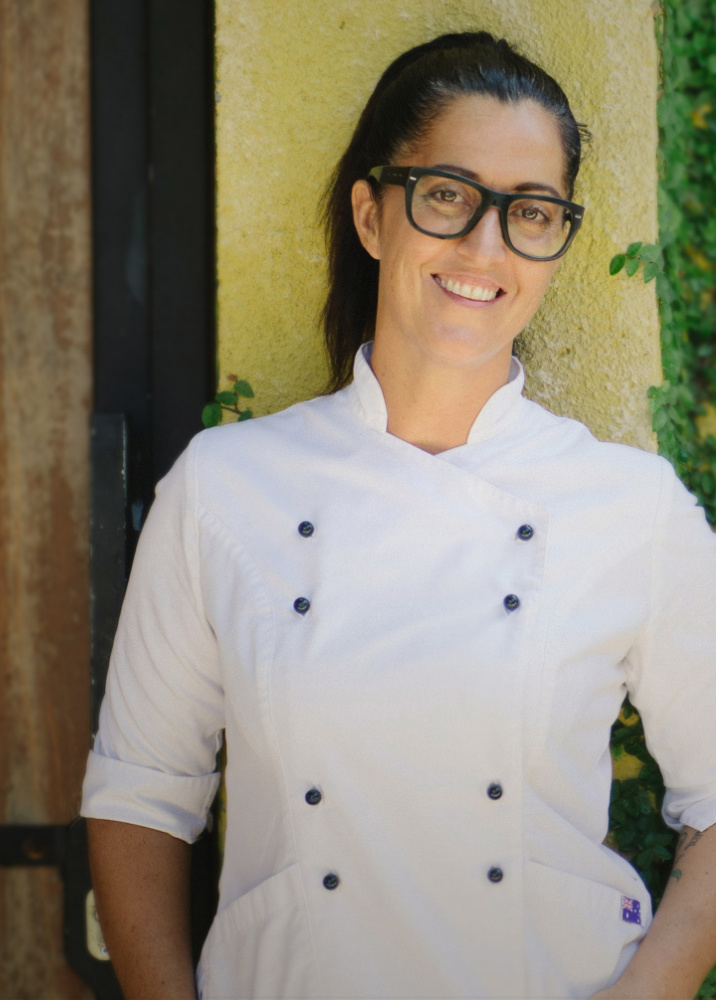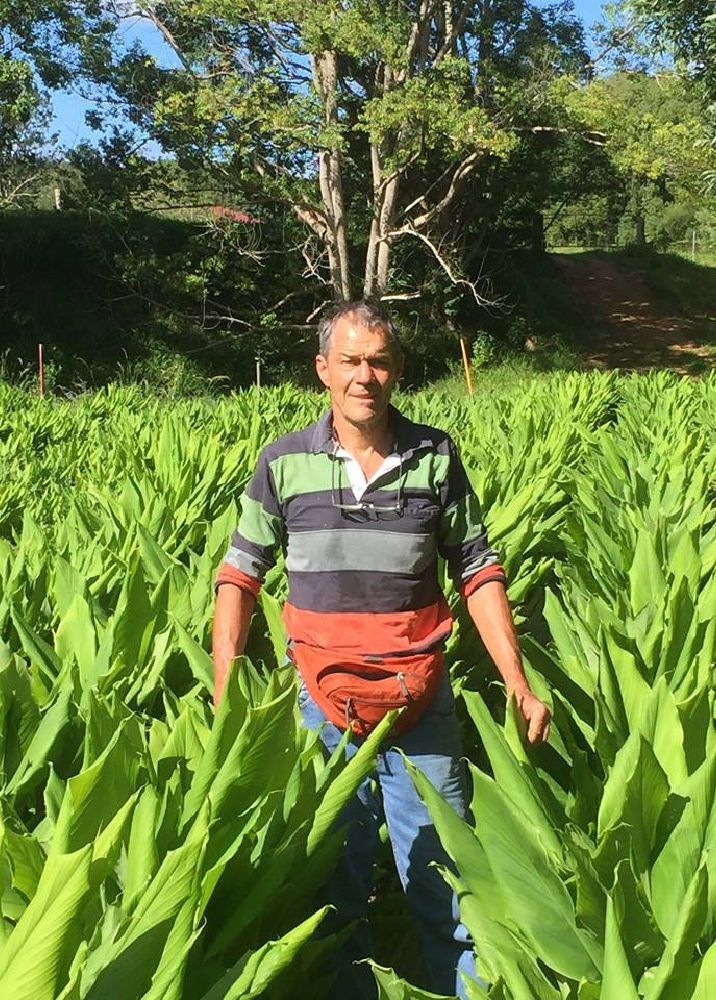

In 2001 at 52 years old, Janette Murray-Wakelin was diagnosed with highly aggressive carcinoma breast cancer and told she had six months to live. Twelve years later not only having cured herself of cancer, Janette along with her husband Alan set out to run around Australia completing 366 marathons in 366 days, setting a new World Record. Now travelling the world promtoing RAW the Documentary, Janette is living proof that anything can be achieved when living a conscious lifestyle.
As spoken to: Emma Lodge
I read your book ‘Raw Can Cure Cancer’ and was so moved by it. Your diagnosis and the emotions associated, I felt like I was riding that wave of fear and empowerment with you. What prompted you to share your story?
Janette: Well it was such an experience to be told that you’ve got cancer for one, and that you’re going to die for another. The first reaction I had was that’s not going to happen which is something classically known as ‘being in denial’, and yes perhaps I was denying, but I was denying that I was going to allow that to happen, rather than that was the case. So I went through the process of making lifestyle changes. You become so passionate when things go right that you want to share with other people because that’s what we’re here for, to share these experiences and knowledge. So I felt that I needed to share my experience and let people know that there are other options.
Having completed marathons prior to your cancer diagnosis, do you think that helped you face your cancer challenge in terms of mental preparation? Do you think having a mindset of drive and determination is what got you through?
Janette: Not entirely, but yes certainly I do get people saying to me you’re really strong so it must have been easier for you, but then I think that comes down to placing a higher value on yourself and realising that you’re worth it. A lot of people give up; especially when they’re told they’re going to die so they believe it and they do, rather than questioning the situation. I really think that’s something people need to be aware of is questioning everything, and asking does this make sense to me? Nothing I was told made sense to me, so I had to do something about it. I think training for marathons is more about discipline and commitment and making it a goal to work towards and achieving it.
I ran a marathon a couple of years ago. I trained, I ate really well, but I think my mindset had everything to do with completing it. I was determined and knew without a doubt that I was going to succeed, and people who doubted me fuelled me even more to achieve!
Janette: Certainly running a marathon is more in the head than in the legs; once you’ve trained it’s all in the head really.
It really gave me the understanding of how strong the mind is and how you can achieve anything when you really set your mind to it. Obviously there is discipline with it, such as changing your diet.
Janette: Yes certainly changing your diet and choosing nutrient dense food helps. A lot of people say oh I can’t do that or you know I can’t give up my whatever… but if they just got their mind out of the way and did it, they’ll find that in being more nutrient laden from food, the body actually responds in a way that makes it easier, and then your mind becomes clearer, so you’re able to think more clearly. Without a high level of nutrition from living food I don’t think you can achieve as well, certainly not physically. A lot of people who are athletes, even those who are quite elite, are always pursuing something that they can use to maintain or outperform their level of fitness whether it be some sort of super food or energy bars etc, but you actually don’t need them when you’ve got a high level of nutrients in your diet.
So in 2001 you were diagnosed with breast cancer and within 6 months you were given the all clear. I know there is quite an extensive list of changes you made in your life, but what were the most profound changes that you made?
Janette: The treatment itself was more therapy than treatment because I refused the traditional treatment. I guess the biggest changes were actually spending time researching what would be the best route for me to take. Inherently we knew that eating fruits and vegetables and avoiding junk food was of benefit, but we had never really spent time researching it. So the more I found out the more I was like oh yes of course that makes sense and knowing you have the ability to choose your direction and make it happen, so long as you know to love yourself enough. For me it was quite a big change, and I think for most people, especially women, we find ourselves predominantly caring for others, and our own wellbeing takes second place or less, so putting myself first and realising that it’s not selfish, it’s self loving, that was a big change.
Successfully you got through your cancer journey. Alan obviously you were on the journey as well, did you notice any health benefits for yourself from these changes?
Alan: Yes I sure did, it was just amazing because changing all these lifestyle habits all of a sudden we became very fit and very well. We thought we were already fit before we started the journey because we could run marathons and races, but we came to a whole new level of wellness and that was the biggest thing I noticed. There were also new options presented to us that I had never really heard of before like fasting. When we found out that you could go without food for 2 days, 4 days even 10 days, we dabbled in that a bit too and that was also a big help.
Did you receive guidance on going raw and how to manage your diet during therapy?
Janette: I had a naturopathic physician who was not only very professional in what he does, but was also a very good friend. He helped my body heal itself by figuring out a therapy of nutrient laden elements and substances that would help it do so, rather than saying this is the direction everybody needs to go and here’s the supplements to go with it, follow it. He actually worked with every person individually, and I was very blessed to have someone like him to work with.
Alan: We were like a big sponge, we did a lot of research specifically for healing and health and started following amazing people like Dr Douglas Graham and Gabriel Cousins and went to all the health seminars and fruit festivals and started meeting people and hearing their stories and experiences.
Janette: And I think there’s so much information on the internet today, so we basically took what made sense for us from various sources and that way we built our own way of being. We don’t follow anyone in particular, but we certainly take ideas from people who follow a raw conscious lifestyle to understand how it works for them. Our friend Dr Robert Lockhart is absolutely brilliant. He practices a simplistic lifestyle that really works, and he’s one of the healthiest people we know. I think a lot of people tend to think and analyse too much.
Really we need to get back to a simple, natural way of living and the answers are all there. It’s pretty easy really; if you eat living food or dead food then clearly you’re going to get one of those two responses.
Alan: And I also think a big part of having the support and guidance from the naturopathic physician, was that he could take blood samples and send them to various labs, so Janette had some markers and that was a huge thing because right at the very beginning he took a whole series of blood samples from Janette, and a month later he did the same thing again. So right from the start and then after two months of monitoring you could see it was good with less cancer cells in the body.
Janette: Yes and he was adjusting the therapy accordingly. For the first six months and certainly for the first 3 months it was intensive therapy, mostly intravenous that aimed to get as many nutrients into the body, much more nutrients than I could have possibly eaten or juiced, even though I was doing that at the same time. So with my actual diet I was mainly juicing, however there wasn’t a great deal of fruit as we were in Canada and it was winter, so I was more into juicing carrots and beetroot and things to build up the blood and help rejuvenate my immune system.
I noticed a big area you touched on in your book was the support you received, how important was that for you?
Janette: Yes I think the best thing apart from his professionalism and monitoring the treatment and adjusting it accordingly, was the support I received along the way. I’d go there sometimes for a 3 hour intravenous session and all that time I’d be thinking to myself is this really working, and am I actually going to get through this? All these things would go through my mind and sometimes it would be quite overwhelming, especially if that particular day my body wasn’t taking the therapy as fast as I would have liked. The therapy was always monitored on what rate your body would take it in, so sometimes you’d have to sit there for 3 hours thinking is this really worth it? You know, and end up placing a higher value on something that’s not relevant like I need to get to the shops [Laughs].
Afterwards he would say come out to the garden and he would sit with me, sometimes I was crying (which was a lot of the time) and he would put his arm around me, and this was so important. I mean, I was getting this at home from Alan too as a support person plus family, but just to have empathy from a professional was so, so important, and that is what I wanted to highlight in my book.
What’s really important for a person who has a diagnosis or not yet, is that they find those people who have empathy, that’s the true importance, finding someone who can give that support.
Yes and that comes back to the power of the mind and getting that mental boost.
Janette: Absolutely
Especially when you’re getting those blood markers read, that must have been a great boost for your mental state which then uplifts your emotions that affect your cells, so you can flood your body with positivity.
Janette: And my markers weren’t always going well, but that was to do with the body having chemical changes and also a certain amount of detoxing was going on for sure. So it was an up and down rollercoaster ride, but he was there at every step for reassurance, and clearly that wasn’t just for me but for everyone. Once I went to his clinic and it was so overflowing with people that they were out in the waiting room hooked up as well. I shared this in a chapter of the book about the feeling and ambience of being there amongst other people, a lot of them in much worse health situations than I was, but everyone was so up and positive, such a difference to being in a hospital ward or in a doctors waiting room, as really how many times in a doctors waiting room do you actually converse with another person sitting next to you? Whereas, we were all telling each other our hope stories, it was such a difference and so important, almost more important than the therapy itself to be honest. You know, I certainly had a lot of people who were not happy about my choices and they made that very obvious, whereas others said that’s the choice you’re making we’ll support you. One of the things my naturopathic physician said when I was feeling isolated and my extended family thought I was crazy, was to ask them to support the choices I had made, and if they couldn’t give it to me then it didn’t matter because I’ll get it from those who can. A lot of people don’t ask for the support they need, they just soldier on in their own way, but you get the ability to ask for support when you go within and understand that you’re really worth it.
What did the doctors say when you were given the all clear?
Janette: The all clear was from the allopathic doctors and their reactions were well that’s unusual, gee… your markers are looking quite good. I only had one doctor who was actually quite interested and she would ask what I was doing as she knew I wasn’t following the recommended treatment plan. Her reaction was that’s great because anything that you can do that’s a positive to help the body is brilliant. So I had a doctor who was happy for me to be going in that direction, whereas the majority refused to believe that anything other than what they offered could possibly be of any benefit. When I got the all clear my oncologist said to me oh we must have misdiagnosed, so there was a professional who would rather say she misdiagnosed than admit that there was another way.
As Tyler Tolman would say another case off to the miracle filing cabinet!
Janette: Well there’s people who have even cured themselves through prayer, that may not necessarily be a religious thing, but it’s the power of belief in yourself, and the innate ability of your body to heal itself given the right tools.
So what is your typical diet now?
Janette: A smoothie in the morning or just some fruit and then around 4:00pm we’ll make a juice if we’ve got things to juice or a salad or fruit, that’s pretty much it. It’s really simplified now compared to when we used to make all sorts of raw high cuisine.
Alan: And this seems to be a trend with raw diets. You start off making raw pizzas or raw lasagne and all these raw gourmet dishes, but in almost every case after 10 years raw foodists start to simplify meals and usually around 15+ years of being raw they just eat simple food. We have friends that have been on a raw food diet for 30 years and they’ve all ended up the same way, it gets more and more simple and they eat less and less yet they look really well.
Janette: It really is the true meaning of less is more; you don’t need to eat as much as you think you do.
Alan: Just as example, in the world today even including the poorer countries there’s more people who are sick by having too much protein than by having not enough. How many people do you know who don’t have enough protein? Everyone who is overweight or looks unwell there’s every chance they’re having too much protein. That’s just one example and you can change that word from protein to B12 or calcium.
And that’s a question I see you get asked a lot as people are concerned as to where you get your protein from, and many people believe that calcium is just from dairy and iron from meat.
Janette: Clearly what we eat is where we get it from, apart from what the body makes.
Alan: We have a fellow in our documentary Robert Cheek the big body building guy, I think he summed it up pretty well. He said if you’re eating enough nutrients from fresh, organic ripe fruit you’ll get everything you need. Every single thing. He also said “you’ve gotta ask yourself, say you’re overweight or not feeling well or you’ve got eczema or other diseases, are you really eating food? Are you REALLY eating food?”
Because there’s so much stuff out there that’s actually not food. You go into a supermarket and there’s aisles and aisles of stuff in there I don’t know what they are, we don’t eat them and people can think they’re eating a good diet but actually they’re not eating real food.
And it’s eating enough of the good food and reaching out for the right snacks.
Janette: That’s right, so if you get a banana and you’re still hungry then have another one because eventually the body will say that’s enough. But don’t think about it; let your body tell you. So that way you actually work with the body’s wisdom and what you need. And you don’t need to think about it, you don’t need to analyse it, you don’t have to count calories, you just have to be sure you’re getting nutrients, lots of them.
Is it expensive being vegan? When there’s so much cheap convenience food around do you think the cost of fresh versus packaged foods has had an impact on our choices?
Janette: Definitely it has an impact on the choices we make but it’s because we’re not realising the benefits of the right choice. Yes you can get really cheap processed food but what are you actually getting? No matter how much you spend you won’t be getting value as you’ll find yourself constantly craving for more food and snacks, and the body is wanting more of it as its searching for nutrients.
Alan: Sometimes I buy a nice big ripe pineapple for $3 and purchasing 3 or 4 of them seems a lot but…
Janette: But the difference in the nutrient value is enormous
Alan: So if we compare a nice big ripe pineapple to a caramel slice…
Janette: It’s not comparable because there’s nothing in a caramel slice
Alan: And meat, for example, some of the expensive meats are $15 or $16kg, whereas for fruit and veg we very rarely pay more than $2 or $3kg.
Janette: Yes exactly. So being vegan is not expensive because the more you eat of it the less you need because you’re nutrient laden, so you’re building up this level of nutrition. Living up here is way cheaper too. Yesterday we went to the market and picked up pineapples and pawpaws and nice ripe local pears at 99c kg
Alan: Most people find it costs more when they’re making a transition from cooked to raw as they’re still buying goji berries and maca powder and all those quite expensive superfoods, then after a while you find out that actually you don’t need them at all. To sum it up we spend less than most people on food.
Janette: It’s also about knowing your community, becoming friends with the neighbours, fruit dropping off the trees, swapping fruit. It’s always good to have non-vegan neighbours with lots of fruit in their garden [laughs] cause they’ll give you all their fruit. And growing your own obviously is a huge benefit. And eating seasonally, that’s a big thing too, so if you eat in season not only are you better off nutritionally but the price is better, and buy locally.
Was it difficult transitioning to vegan? I tried going vegan once and lasted about half a day and then went to bake something which required butter and eggs and didn’t know what to do! And you’re raw vegan is that harder?
Alan: I think the longer you do it the easier it gets that’s for sure. I can remember in the first couple of months even the first 6 months if I went to a pot luck dinner and somebody had smoked salmon I’d be right into it, I just couldn’t help myself and because we lived for years in France I really had a taste for fine cheeses. I’d go there and look at them and could visualise the taste, but then after a year that was all gone. It’s a habit, just like smoking cigarettes when you first give up its hard because you’ve got this habit, but then after a while if I see someone smoking a cigarette I really think well they’re quite foolish but for 40 years that’s what I did and no one could tell me that was a silly thing to do cause I knew better [laughs].
Janette: For me it wasn’t hard because I had this huge reason. I think humans tend to make really good decisions in a state of crisis, but they wait until they’re in a state of crisis before they start making good decisions. If you have a diagnosis or any kind of symptoms whatsoever that don’t make you happy, then now is the time to do something about it, otherwise it can be a long way to climb back up that ladder.
People have got to think about the cause of a health issue rather than how they can treat the issue, because you’ve got to get to the cause, eliminate the cause and then you will have the cure ALWAYS.
The body works around the clock 24 hours a day for your whole life and it never stops trying to get you into a state of health, as that’s what it’s designed to do. So give it a hand. So for me it was not difficult, I had to do this and then like Alan said before, the further you go into it, the more nutrients you’re giving to the body the more it rejuvenates, the better you feel, the more energy you’ve got, the easier it becomes.
So in 2013 you decided to run a marathon everyday for 366 days. What was the aim and what attention or message did you want to share?
Janette: We came up with the idea because it was the biggest thing we could think of that would attract attention from everyone, rather than just our family and friends. It would be something big enough to attract mainstream media and for people to question how is this possible? So from a physical point of view we knew this would draw attention first. Then people would realise there’s got to be a lot more to it than just being able to put one leg in front of the other. That was our purpose, for people to start asking questions and see by example what’s possible, then to start asking the right questions like how is it possible? What are you doing that is making this possible? And how can I do that to make it possible for me too? So that was the point of it and running around Australia just happens to take a year.
Oh wow I didn’t realise that!
Janette: Yes that’s how it works out, so basically that’s the distance running around the perimeter of Australia. First of all we figured out how many kilometres and then divided that by a marathon and sure enough it comes up to 365 days.
Oh I was going to ask then how come the extra day?
Janette: So after we’d been out there for a few months’ people were starting to ask has anyone ever done this before? So we looked into it and found that someone had a world record of running 365 marathons but it wasn’t consecutively, so we thought well we’d better do an extra one just to make sure so there’s never any doubt.
Alan: The last marathon was the best of all. We started in Melbourne and finished in Melbourne so from there we then ran out to our home which was actually 48km, but it was just a fantastic day to run out along the river and close to the places where we had been training. And people joined us.
Janette: Yes it was like the Forrest Gump of Australia and it was fantastic! There was no doubt that we could have kept going but we had things to do and people to see and places to go [laughs].
I know your running shoes have been a big talking point and there’s so many benefits of earthing and grounding and when we’re walking on the earth’s surface we’re receiving energy from the earth and we’re giving back to the earth, and so your shoes are a really an interesting design and I’m just wondering with running was that your way of recharging yourself along the way! [laughs]
Janette & Alan: [Laughs] Yes!
Janette: I definitely think so. I would have preferred to run barefoot but when we found out what the terrain was like, Australia has probably the most thorns and sharp things, rocks and stones of any country in the world.
And heat!
Janette: Yes which we also had to contend with, so we decided to go with the Vibram shoes. We figured out if we could assimilate barefoot running our bodies would run the way they are naturally designed to do and that’s exactly what happens in those shoes. In the past we always had what was considered to be normal running injuries; however we just couldn’t afford to do that with running a marathon every single day, so we had to make sure we were running in a way that would be most natural and we never got any blisters.
Alan: We had 16 pairs each for a year, seems like a lot but that’s 1000 kilometres per pair which is really good. The thing that you were talking about earthing and grounding is really really important. We go barefoot around here as much as we can. We have grounding pads at the computer which grounds into the house grounding system. And we feel the difference. And with flying, when we travel we make sure we take our shoes and socks off and have our feet on the metal foot rest.
Janette: So there are simple things that can make a difference.
So now 1 in 2 people are being diagnosed with cancer, does this make you even more determined to share your message?
Janette: Absolutely yes. When I was diagnosed it was 1 in 9 but clearly whatever we’re doing is not working, so the sickness industry is benefitting hugely.
We need to wake up and realise we can do something about this which means taking responsibility for our own wellness. That’s the first step. Taking responsibility for our children and our elderly or those who can’t or aren’t able to otherwise do it themselves, and taking responsibility for all living beings as well as the planet itself. Everything is connected and there’s absolutely no question that we’ll never stop trying to encourage people to learn and make a difference. There are a lot of lifestyle choices that will make a difference, not only to our own health but to the health of others and the health of the planet.
Because seriously this is it, this is our home and no matter how many spaceships they send up there, we’ve got to take care of our planet. Growing animals for human consumption is one of the biggest environmental problems for the planet. We’ve got to make changes, so just going vegan alone would pretty much take care of everything. Our state of mind would be improved and by going raw it’s taking one more step towards consciousness and there’s no question that’s going to make a difference, so yes we will continue to share this message for as long as we can. I think we care because of the type of lifestyle we lead.
Alan: We also care because of our grandchildren and ideally we’d like to be here in another 40 or 50 years to see what’s happening, interesting times in the next 20-30 years, and we’ll be here because we choose to be.
Yes it’s all a choice.