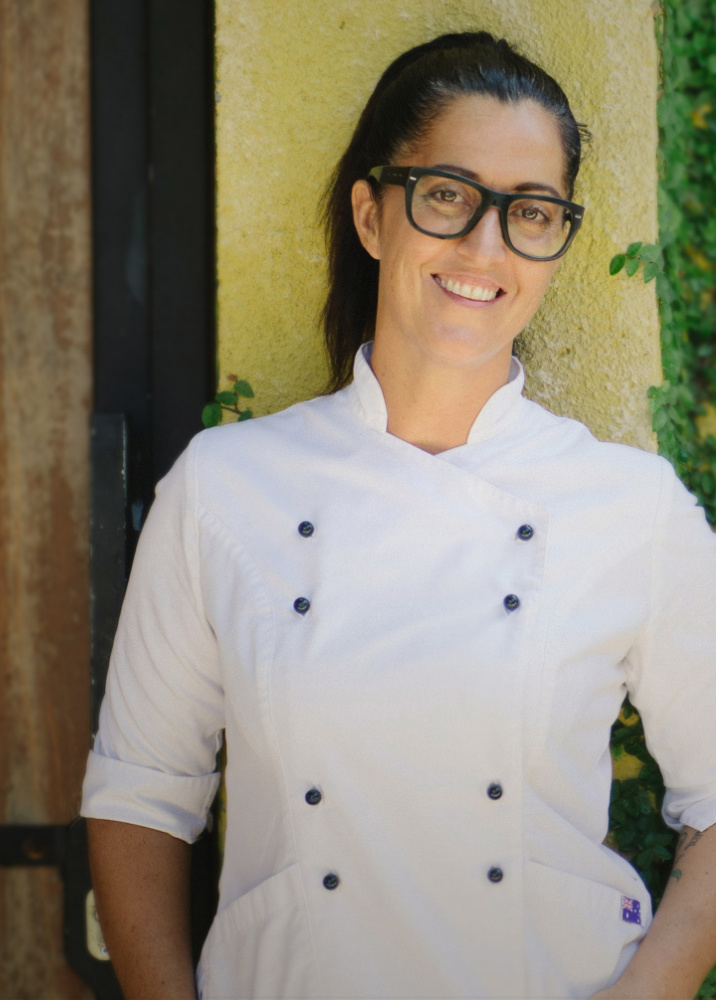

Shilo Mason is a respected biochemist who specialises in nutrition. Over the last ten years she has presented to integrative practitioners and scientists on a variety of topics including mental health, inflammation and nutrition.
As spoken to: Emma Lodge
Tell me about your background and role as a biochemist.
Shilo: Biochemistry is an understanding of the inner workings of the cellular structure, what any organism is, how a cell works from replication to rejuvenation or detoxification, genetic structures and DNA. It’s basically your entire working system, if you can imagine a circuit board and all the little networks; this is what biochemistry looks like. It’s a subject that pulls everything together, from chemistry and physics through to anatomy and physiology. For me biochemistry has always been incredibly remarkable.
Sounds intriguing!
Shilo: And it is very research orientated which I also love. My family have been in clinical practice for 40 years, so correlating naturopathy with the inner workings of the body makes it a lot more interesting.
I think an integrative approach is so important.
Shilo: Unfortunately both elements of those modalities don’t mesh particularly well. There’s a lot of anecdotal therapies in naturopathy where you don’t necessarily have evidence to back up the results. We know it works, but the strict biochemistry and pharmaceutical approach requires particular trials to be conducted.
And sometimes things in life just can’t be explained by science, nature is pretty clever, we may not know to the depths of how it works, it just does.
Shilo: Yes exactly, but there’s also a critical lack of research and a critical lack of money.
Why is there a lack of research?
Shilo: At the end of the day its economics. Why would you put a million dollars into researching curcumin that you can’t patent and can’t get your money back? We research in different ways, for example, we’re working on a small clinical trial for autism using a very high grade of broccoli sprout to see how much modification we can make to the genetic structure of kids with autism. That’s amazing but I can’t patent broccoli sprouts. I can draw conclusions and correlations, and do we see differences? Absolutely! Some kids who weren’t verbal are now verbal, so there’s major things happening, but if you went to a drug company that might have a billion dollars are they going to put it into broccoli sprouts? No they’re not. It’s just business sense.
A lack of evidence doesn’t mean it doesn’t work; we just don’t have enough evidence to build an argument. Everyone wants effective, accurate, reproducible results, but in nature there are so many variables.
Yes I guess looking at where and how it’s grown, the varieties and soil health; it must be hard to get accurate results when nature is so unique and varied.
Shilo: That’s what I love about the combination of science and true complimentary therapies where you’re looking at a whole person approach, biochemistry does that. The biochemical pathways are so complex that we can’t possibly know, but we can have an idea of what flows into other things what bits affect what, so it’s a great combination.
So gut health seems to be a hot topic today. There’s now growing awareness between gut health and overall wellbeing, the gut-brain connection for example is one.
Shilo: It’s huge. Gut health is incredibly important to our immune system. I really think there’s now enough evidence to show the gut as almost being them matriarch platform of the whole body.
There’s quite a few interesting research articles that look at the microbiome of the gut being a nanny type system, and they are bacteria, yeast, fungi that interact with our immune system guiding us to make better decisions, now that’s just incredible.
But we’re also seeing a spike in food intolerances today, more than ever before, and signs of poor gut health. Why is that?
Shilo: It’s such a complex subject with perhaps three sides to this whole argument. The fact that there’s more toxins, heavy metals, PCB’s, pesticides and general toxins in our environment that impact on our detoxification process is one. Dietary emulsifiers are my pet hate which people aren’t even aware of. If I said to you “what would upset your bowel?” you’d say antibiotics, eating deep fried rubbish, drinking too much coffee and not eating enough greens, but nobody mentions simple things like oils put on salads that have emulsifiers in them. Emulsifiers actually deteriorate the mucus lining of the bowel. Not only does that mucus lining act as food for some really great bugs, but it also protects and modulates the internal environment.
We’ve also got less diversity of bacteria in our bowel. Research is now showing that bugs colonise very early on, effectively given to you by your parents, and you don’t get to change what bugs are there so if they’re gone, they’re gone. The only way to bring them back is constant inoculation, so there’s a really big argument if you have completely lost a particular species of bug. You never get them back full stop.
So are you saying that gut bacteria is passed down from generation to generation, but with our current lifestyles we’re now seeing less diversity and fmore intolerance?
Shilo: Absolutely. Species diversity is something we’re killing before we even know what they do. There’s a great little line from Dr Jason Hawrelak who says – “we are the custodians of our gut microbiota. Let’s steward them well.”
So he talks about us having a genuine responsibility for all the generations that go beyond us. You can’t change what’s already been passed down, but you can change your contribution because it’s a choice. You can choose to continue the deterioration, or keep the population as dynamic and diverse as possible.
So what can we do to improve our gut microbiota?
Shilo: For me it’s reaching back and saying food is medicine. You could take a probiotic for 6 weeks, but you’re going to be eating food for the rest of your life. You influence so much about your body and who you think you are by what you eat.
What foods should we be reaching for to improve gut health?
Shilo: There are no fixed rules when it comes to our gut health, we have such limited information. What is very clear though is that the amount of sugar we have and type of sugar is very influential, the type of fibre we have is critical and also the balance of protein and fats. For example, you can modify within 48hrs the bugs in your bowel if you have huge fat loads.
But everyone seems to be scared of fat.
Shilo: Yes but you’ll want it judging by how fast those bugs are growing.
So gut health doesn’t have to be complicated?
Shilo: Simply eat nice healthy foods and a wide variety of them. Things like easy grated beetroots, lentils, cold steamed sweet potatoes, wild rices, quinoa, oven roasted apples; that is the most remarkable old school naturopathic trick to sooth the gut.
I’ve also been reading about the latest weapon in gut health – faecal microbiota transplants or ‘poo implants’ and you recently had a call out for “poo donors”.
Shilo: [Laughs] Yes this is an exciting new area of research. Gastroenterologist Dr Stephen Fairley and Professors Robyn McDermott and Louis Schofield from James Cook University Townsville recently conducted a world-first scientific study which has shown remarkable results.
So explain to me what exactly is a ‘poo implant’?
Shilo: Faecal microbiota transplants involve the transfer of faecal matter from naturally fit, healthy and happy people into the colon of those who are obese, diabetic or have irritable bowel syndrome. The idea is that if I take your healthy bugs and transplant them to someone else in the lower bowel, then those bugs will interact with the ecosystem improving the health and diversity of the microbiome.
So it’s basically putting a healthy poo into a syringe with a bit of saline and glucose (obviously it’s a lot more scientific than that) and then straight up the bum. It’s a gift because these recipients had been unwell for a very long time, they had been living with a terrible diet, gastrointestinal issues, and a lot of them were on multiple medications.
What results are people seeing from their err.. “gift”?!
Shilo: I spoke to a few people who received the donor, and whilst they didn’t get the weight loss, their mood changes were astronomically different, so happier, healthier and able to do a lot more. They didn’t get as much dark time they were less anxious. That seems to be the theme we are hearing more than anything else. Gastro is very clear in studies in ulcerative colitis, major inflammatory bowel disorders and coeliac disease which are quite interesting. So being able to regenerate, stabilise and recuperate in that area is great. Are the studies promising? Oh my goodness!
There’s no doubt that many faecal trials are working astronomically! It may sound a bit weird, but it’s actually a really exciting thing, I love talking about this!
As I was researching this subject I could see links tracing back to soil health. Not only are we destroying our gut micro flora through antibiotics, processed foods, antibacterial soaps, hand gels and other chemicals that strip both the good and bad bacteria, but we’re also stripping soil health through chemical fertilisers, fungicides and pesticides which is where our inoculation begins.
Shilo: Yes absolutely. I think our understanding of bacteria and disregarding the source is really going to change; it’s like a ‘watch this space’ moment. I read some articles a long time ago about how much we wash our fruits and vegetables, as a lot of soil bacteria in healthy soil is actually really good for our bowel. Microbial communities take years and years to develop, so why aren’t we using soil borne bacterial species and implementing them into our food? Like actually getting teaspoons of nice healthy organic soil and putting it in with ferments for example.
What an interesting concept, especially as just one gram of fertile soil can contain billions of good bacteria.
Shilo: And if you’re not getting the soil on your hands, you’re not getting inoculated daily. Everyday I’m out digging in my garden or at my aquaponics system. I’m turning the compost and also making ferments.
Yes and I think what puts it into perspective, as you said earlier, is having a duty of care and stewardship for the next generation.
Shilo: Yes and allowing children to get involved, to be exposed to bugs and build up a natural immunity and resilience.
Isn’t it interesting.. as humans we need community connection to really thrive, not only in our external environment but also internally too.
Shilo: Absolutely right. That’s an interesting correlation. Networks are so important and like that circuit board in biochemistry, it’s all so interconnected.
aryiahealth.com.au