
Step out of the low and into flow – that’s what applied neuroscience practitioner and founder of The Brain Room, Rob Gronbeck, encourages athletes, students, professionals and everyday people to achieve. When we align ourselves with an activity that challenges us and sets our souls on fire there is a profound effect that takes place within the body known as the ‘Flow State’. Dive in with us as we step out of the everyday humdrum into the exciting world of Flow…
As spoken to: Emma Lodge
I saw a photo of a book you posted on Instagram and the caption read “What you find on someone’s coffee table can tell a lot about who they are, how they see themselves, what they aspire to be or want to join”.
Rob: Was that the Stealing Fire book?
Yes! I had to get an insider on this, so I grabbed myself a copy, and what particularly got me excited was the research on Flow.
Rob: Oh, you went to Flow land!
I did! and I can so relate to it because when I’m working on Bloom, I get into that flow state where the world seems to fall away, time disappears, and I can work happily for hours in my own realm.
Rob: Well, flow is ultimately a state of being fully immersed in an activity and having a feeling of energised focus, full involvement, and enjoyment in the process.
When in Flow the body produces these amazing feel good chemicals which are norepinephrine, anandamide, oxytocin, serotonin, dopamine, that drastically shift how we feel.
And when we shift how we feel it’s a sweet relief from trauma, burnout, pain, disconnection, and the feeling of not being yourself.
Yes, and I read these chemicals are addictive too, no wonder I get so involved in my projects and can’t put them down.
Rob: You could take all the different street drugs together, but you’ll never reach the same enhanced state that the body naturally produces in perfect combination when in Flow. It’s an amazing feeling and I’m so stoked when someone tells me they’ve found something which gives them the flow experience!
What I find most fascinating about the book is the story behind author Steven Kotler and his experience with Flow.
Rob: He’s certainly got an amazing story on how he tapped into Flow. At the time he was battling Lyme disease and had literally been bed ridden for 3 years and the doctors had all but given up on him. He was on the verge of killing himself, and then a friend showed up one day and dragged him out for a surf.
He had no energy but, in that moment, that nonordinary state (flow) of jumping up on that surfboard, it propelled him into this superhuman experience. So, he went from bed ridden to surfing, that’s a pretty radical shift, albeit he was in bed for about 15 days afterwards to recover.
But by continuing this series of flow states it shifted him out of Lyme disease and brought back his health.
That’s a pretty radical shift, especially for a chronic autoimmune condition.
Rob: Yes, it’s all about changing the channel and getting the brain and body out of a rut. Flow is a non-ordinary state that usually involves radical changes in body, breath, intense focus and anything we can do to ramp up novelty. For Steven, surfing released a whole bunch of neurochemicals that amplified the immune system and reset the nervous system. All the normal stress chemicals such as cortisol and norepinephrine get flushed out during a flow state, and afterwards the nervous system calms down which allows healing to take place.
So, Flow is about changing the mindset, which given the right conditions, the chemicals released could potentially flood our cells enabling the body to destress and accelerate healing?
Rob: Yes, and that’s what Steven did, he flooded his brain and body with these feel good neurochemicals and boom… how good is that!
It’s incredible what the human body is capable of. Steven then realised he had tapped into something unprecedented with this ‘flow state’ and founded the Flow Genome Project to continue his research…
Rob: Yes, that’s how the Flow Genome Project began. I trained with Steven in California this year and completed the Flow Genome coaching certification. Steven talks about ‘ecstasis’ or stepping out of yourself and that’s the one of the parts of the triangle we learned from the Flow Genome Project. The second part is ‘catharsis’, that’s healing from emotional trauma or life trauma. Thirdly, ‘communitas’, which is coming together as a group and suffering, working, performing and playing together. Whether its Tough Mudder or the Kokoda trail for example, suffering in particular together as a group helps us to connect with each other, and bond deeply.
How about discovering your passion and values? I’m sure that plays an important part of finding your Flow?
Rob: Yes, it certainly does. I met a returned serviceman recently and he told me he couldn’t sleep, his mind chatter was all over the place, he was constantly in stress, and then he discovered cycling. He’d ride 120km a day and he realised how much it shifted the way he felt, the endorphins kicked in, his brain switched from thinking about the past or future to just to being in the moment, time would fly, and that was his remedy, that was his elixir. And so, I love it when people say, “I’ve found it, I know what works for me” and I think that’s all part of the journey, finding out what works for you. Because once you find it, whether its surfing like Steven Kotler, cycling or working on Bloom, man it’s a great feeling, and once you’ve got it, it’s addictive!
Oh completely!
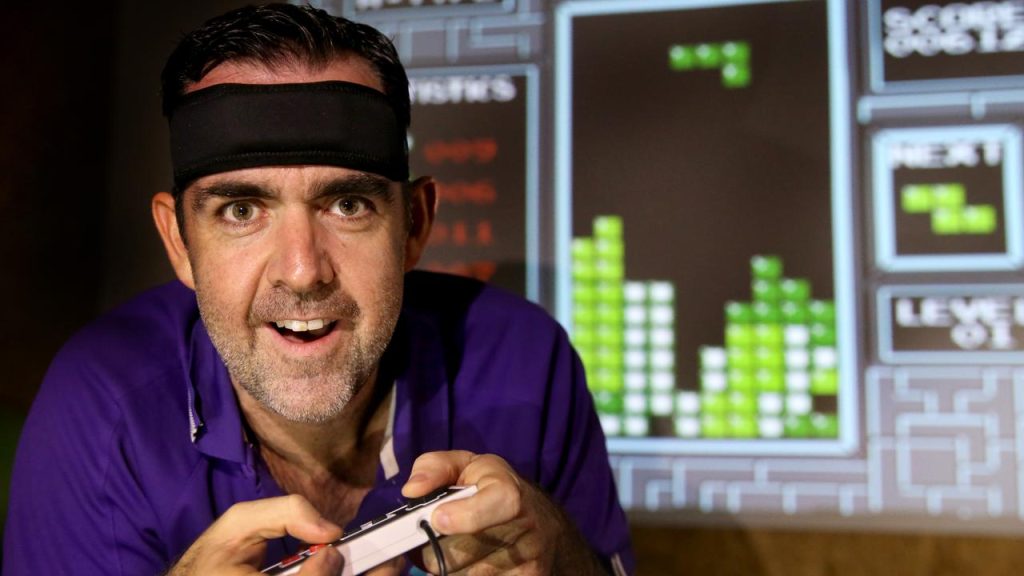
Rob: I find myself playing more and more Tetris these days, it sounds funny but it’s something that I really enjoy, and it’s so addictive and challenging and makes me focus so much. You get better and better but then eventually hit a plateau, and do you give up and look for something new? Or do you stay on the path and eventually break through?
Great point, that’s another component I read about with Flow, is having that continuous challenge that is kind of within reach, but you need to get out your comfort zone to get there.
Rob: Also, the sheer novelty, as the brain is always predicting what’s going to happen next. If it knows what’s going to happen, then these neurochemicals produced in flow will not show up, because they’re not needed. We only need these neurochemicals for example, when we’re flying down a hill and don’t know where we’re going next. We need every one of these chemicals firing off to survive. So, it’s extremely riveting, our brain creates this superhuman modem and we achieve the challenge and go “Wow that was amazing!” But the other side is if you tap into flow too much and are constantly skimping on your sleep, not eating, not getting sunlight (I’m thinking of young people these days into video games), they’re in flow but what happens to their bodies and brains? So, it’s about working hard and getting in flow, but just like a surfer, when the surfs up they’re out on the waves, but when there’s no surf that’s a good opportunity to have a rest day. A lot of flow optimisation is about finding the balance between taking energetically and restoring, so that’s why sleep is so important too.
There’s so many different types of Flow. Can you not find rest in your flow state also?
Rob: Flow is different for everyone. Some people believe flow is when there’s a high heart rate and there’s lots of stress going through the body like mountain biking, yet for other people that’s not flow, that’s terror!
Flow can be writing and painting. It’s simply about getting into that non-ordinary state of consciousness by putting yourself in a different environment, immersing yourself in an activity you enjoy, breathwork, ice baths, saunas, working out, going to a rave.
You can also get into group flow where everything is pumping and amazing. There’s power in group flow which can be activated by music and psychedelics to get you out of your habitual state. All these things are perfect for those who are suffering the torment of just being human, humanity, trauma, of broken relationships, accidents, loss. If you get stuck in that habitual place, these are the things that can get you out.
How about meditation and visualisation for taking you out of your ordinary state?
Rob: Yes, you can use your imagination and visualisation to take you back to a time when you were happy, meditate on the things you are grateful for, what most fulfils you and lights you up.
I use it in cold water immersion, as stepping into a cold waterfall can be a bit of a shock to the system. I take myself out of that cold moment and instead visualise myself stepping into a hot tub and sweating it out. For me it’s more of a mental game, training and harnessing thoughts.
Rob: That’s ecstasis right there! Moving yourself out of yourself and using imagery to change your state and ultimately how you feel.
It’s a bit of a game tricking the brain, which has taken time and practice to train it. I guess it’s like going to the gym, you’re not going to grow muscles after one session, it takes time and hard work, same as retraining thought patterns and building new habits.
Rob: I like to recommend a book by James Clear called Atomic Habits. It’s about building healthy positive habits daily. The easiest tip is to place things in your vision to start building those ideal habits and creating rules with consequences if you don’t follow through. One new habit won’t make a huge difference, but by compounding and gradually adding more you can cement these habits into your daily life such as regular exercise, better sleep , better nutrition, surrounding yourself with positive people, checking your breath and also entertaining activities that are stimulating and engaging. You’re right, it’s not something that can be changed overnight, but by using that compounding approach you can easily add new habits and subtract the old habits.
I like that idea of compounding, changing one little habit at a time, that certainly makes it attainable with more of a chance of sticking to it as well.
Rob: Creating healthy new habits triggers dopamine, which is the feelgood hormone. So, it follows that if you want more dopamine “hits”, then you need to break down those big tasks into small attainable ones that are going to give a positive feel-good reward every time.
It’s so fascinating how much the brain influences our behaviour and emotions. I’m always intrigued with how people get into their area of expertise, as there’s usually a profound story that has projected them into their field of interest. You’ve got a very deep-seated story of how your interest began.
Rob: Yes, I had a run in with some mental illness. At the age of 17 I was consuming a lot of cannabis, drinking a lot on the weekends and not sleeping much. One night my brain got into a state where I was certain my father was an imposter. I went into my mother and father’s bedroom and started to lay into my father as he was asleep. I wasn’t conscious, I was in this hypnotic drug induced psychosis and my brain just flipped. My poor mum rose to find me punching my father. I eventually realised what I had done, but at the same time I was still having hallucinations, I wasn’t myself at all and that made me realise I had a huge issue. Thankfully I happened to find a couple of books at home – The Power of Positive Thinking and 7 Habits of Highly Effective People, which was the start of my self-development journey and making changes in my life towards being a happier, heathier person.
That’s so lucky that you recognised there was a problem and you found that motivation to do something about it.
Rob: That experience has profoundly influenced and shaped my life today.
And the great thing is you have embraced and utilised that experience to learn more and help others. So, what’s next for The Brain Room?
Rob: I’m always looking to add new evidence-based treatment protocols to my practice and looking for projects that integrate a variety of different modalities and treatment protocols. For example, I’m currently looking at utilising for returned veterans with depression and brain injuries. Combining heat, resonance breathing and community (like a group sweat lodge) this has the potential to vastly improve energy, mood, sleep and overall function of the body. My mission is to continue ways to improve my own performance and embody all aspects of my learning, so that I can then introduce Brain Rooms all over the world!
Big goals, I love it! And I love that everything you’re learning you’re fully embracing and living that to lead others.
Rob: Thanks Emma, I’ve enjoyed our flow this morning!